

Dyeing your hair at home can be intimidating, especially if you’ve never done it before. On the flip side, salon visits can be expensive, so it’s a great way to save money if you only want to make small changes to your hair. Keep in mind that it’s best to save any major hair transformations for the salon, especially if you want to go lighter. Professional colourists combine various dyes and developers to get your perfect, custom shade, so it’s best to keep your expectations realistic when using box dye. They’re ideal for those who want to enhance their natural colour, cover greys, or alter their colour a shade or two. If this sounds like you, here’s how to dye your hair at home.
3 Types of At Home Hair Dyes
There are three main types of hair dye: Semi-permanent, demi-permanent, and permanent. Here’s how to figure out which one is best for your hair goals:
- Semi-permanent: Lasts 8-12 shampoos. There are no chemicals in semi-permanent dyes, and they don’t need to be mixed with a developer. The colour just sits on the hair’s surface, functioning as a sheer coating. It alters the tone of the hair but doesn’t penetrate the hair shaft. It won’t lighten hair, cover greys, or change your hair colour.
- Demi-permanent: Lasts 12 to 24 shampoos. Demi dyes blend a new colour with your natural colour. It’s a low ammonia formula generally mixed with a low volume developer. Demi dyes are great for people who want to enhance their colour without having noticeable roots in the grow out phase. They won’t lighten the hair or cover grey.
- Permanent: Long-lasting. Permanent dyes penetrate deep into the cortex of your hair to permanently change its colour. These dyes have a high concentration of ammonia, which is combined with hydrogen peroxide to alter your hair colour. These types of dye won’t fade gradually, so you’ll always notice a difference between the new growth and the coloured hair. They can be used to lighten or darken hair, change the colour of hair, and cover grey.
How to Choose the Right Hair Dye for Your Hair
- Know Your Hair Goals
Figure out your main reason for dying your hair. Do you want to cover greys? Enhance your natural colour? Or change things up completely? This will help you decide which type of hair dye will work best for you. - Set Expectations
A good rule of thumb is to limit your at-home hair dyeing to two shades darker or half a shade lighter than your natural colour to reduce your room for error. Professional hair colourists combine various dyes and developers to get your perfect shade, so it’s good to be realistic about the results you’ll get with box dye.
How to Choose the Right Color
- Consider your skin tone: Your hair colour should complement your skin tone and undertones. Determining whether you have a cool, warm or neutral undertone can help you choose the right colour. For example, if you have cool, pale skin, it’s typically best to avoid super dark shades that can make you look even paler.
- Rethink going lighter: If you’re dyeing your hair at home, it’s probably best to stick to darker shades. Lightening your hair requires bleaching and multiple processes that should be done by a professional.
- Don’t mix shades: If you’re trying to create a custom colour, you should never mix shades yourself. This should always be done by a professional colourist at a salon.
How to Dye Your Hair at Home: 6 Tips & Hacks
1. Prep Your Hair
It’s important to prep for the home hair dyeing process. If your hair is shoulder length or longer, you may need two boxes of dye to cover your hair. Sure, you may end up with a leftover box, but you can always save it or return it. It’s also best to use dye on “dirty” hair. Don’t wash your hair for a few days before colouring it as your natural hair oils will help protect your scalp from any chemicals in the dye.
2. Protect Your Head and Hands
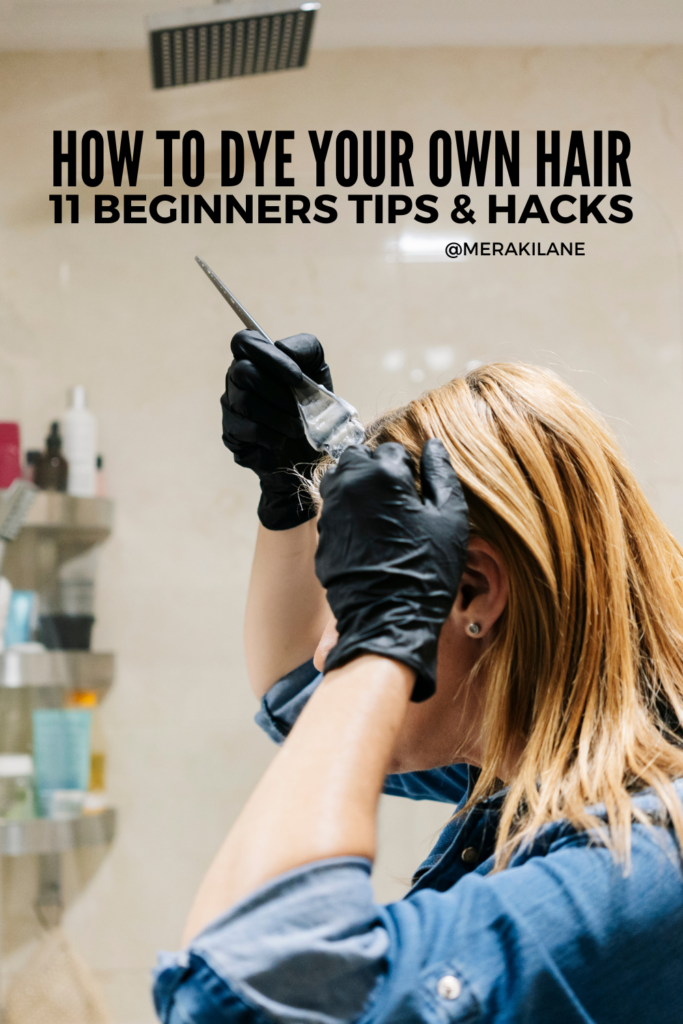
Before your start dyeing, place Vaseline or a clear lip balm along your hairline and on your ears to protect your skin from staining. Oh, and don’t forget a few pairs of disposable gloves to wear when dyeing and washing out the dye.
3. Start Dyeing at the Roots
Your roots need the most time to develop, so if you’re colouring your whole head, begin applying at the roots. This is where regrowth first occurs and is the least damaged part of the hair, hence why it needs the most processing time. Always follow the packaging instructions and allow the dye to develop for the indicated amount of time. Once you’re done with the roots, comb it through the rest of your hair, distributing it evenly. Clip your hair in sections to ensure the best coverage.
4. Wear Proper Dye Garments
Make sure to leave your hair down while the dye is doing its thing. If you place it up into a bun the colour won’t be even when you rinse it out. Wear a hair colouring gown or old clothes you don’t mind getting dye on. Even if you wear a gown, it’s a good idea to wear clothes you don’t care about underneath.
5. Post-Dye Etiquette
When your alarm goes off, sprinkle a little water on your head and mush your hair around before rinsing out the colour. This will emulsify the dye and move it around so you don’t end up with any streaks. Make sure to use the conditioner in your kit when you’re done. If you skip the conditioner, it leaves the cuticle open and the colour keeps developing, leaving you with a darker shade than you want.
6. Make Your Colour Last
Maintaining your hair colour is an important piece of the puzzle. Water is the main culprit in colour fading, so try to extend the time between washes by using dry shampoo and shampooing at the end of your shower to reduce water exposure. If you’re going to be in a pool or lake, avoid getting your hair wet or wear a swim cap. When washing your hair, use a sulfate-free shampoo and conditioner specifically for colour-treated hair, as well as a hydrating hair mask to repair any damage.
If you’re planning to dye your hair at home, use these tips and hacks to get salon-worthy results.
This post contains affiliate links.
Was this post on how to dye your hair at home helpful? We’d love it if you shared it on Pinterest!
Looking for more hair care tips and hacks? Make sure to follow our Beauty Board on Pinterest!


